How a simple composting program can reduce waste, support gardens, and build valuable skills.
Turning Waste into a Resource
On every farm, daily life produces more than crops—it also produces waste. Between food scraps, paper products, and other organic materials, even a small group of workers can generate a significant amount.
But what if that waste could be transformed into something valuable?
Composting offers that solution. For farm workers, it is more than an environmental practice—it’s an opportunity to learn, contribute, and improve daily life.
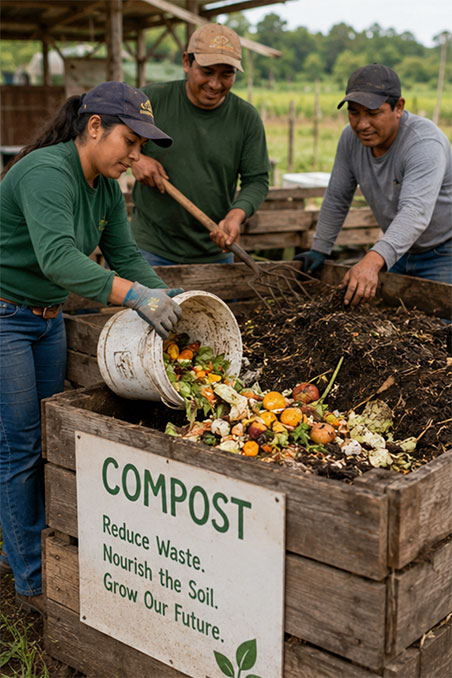
Composting starts with a simple idea: what we throw away can help nourish the soil. Food scraps, vegetable peelings, coffee grounds, and other organic materials can be transformed into rich compost that supports healthy gardens.
Benefits for Workers and Shared Living Spaces
For farm workers living together, composting can help reduce the amount of waste generated in shared kitchens. Less waste can mean fewer odours, cleaner waste areas, and a more pleasant living environment for everyone.
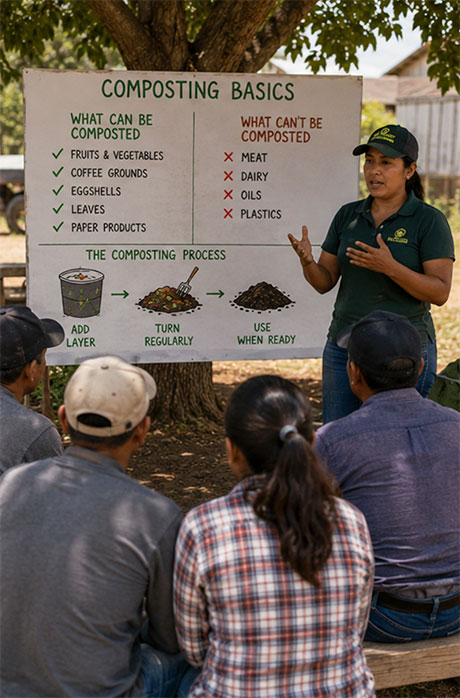
But composting isn’t just about reducing waste—it’s also about giving back to the land.
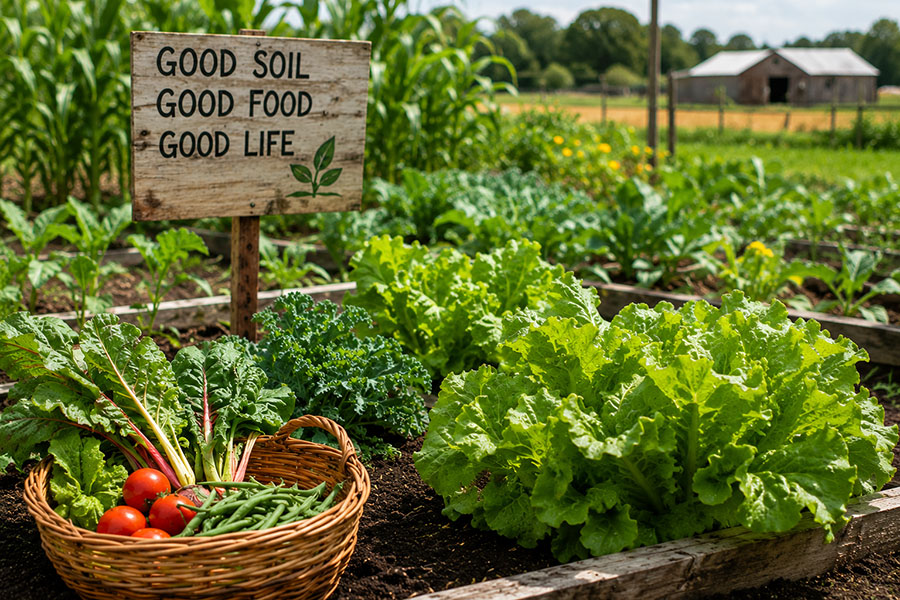
Many farm workers maintain personal gardens where they grow fresh produce for their own use. By turning kitchen scraps into compost, workers can create a valuable soil amendment that helps enrich those gardens naturally.
Not only can this reduce gardening costs, but it also creates a sustainable cycle where waste becomes nourishment, and nourishment becomes food.
Learning New Skills Through Composting
To make composting successful, small groups can work together to manage the process. Team members can learn what materials can and cannot be composted, how to maintain a compost pile, and when compost is ready for use.
With a small team helping oversee the process, composting can remain consistent, organized, and productive.
Some municipalities and waste management organizations offer composting resources, educational materials, or guidance for farms interested in starting a program. In some cases, local representatives may be available to provide information or support.
Building Knowledge That Lasts
A composting program can also provide workers with practical skills they can take home and apply in their own households, gardens, or future agricultural work.
Few farms currently use composting in this way. By introducing a composting program, farms can create opportunities for workers to learn about environmental stewardship while developing skills that can benefit their communities long after the season ends.
A Simple Idea with Lasting Benefits
In the end, composting offers more than waste reduction. It is a practical way to improve living conditions, support healthier gardens, reduce environmental impact, and empower workers with knowledge and skills that can last a lifetime.